The Landmark Shortcut: Why One Tower Cannot Explain a Neighbourhood
See why one tower cannot explain a neighbourhood, and use nearby routes, thresholds and everyday activity to build a fuller picture of its character.
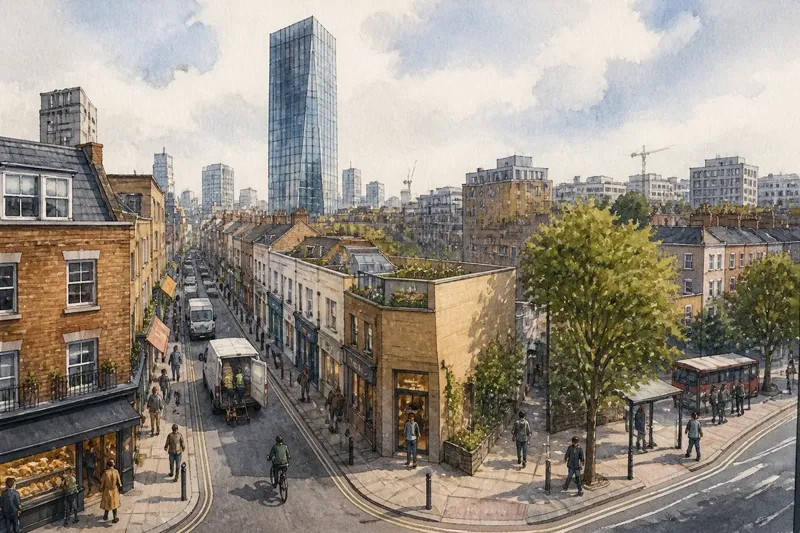
You leave the station, spot a glass tower above the rooftops and decide you have the neighbourhood figured out: offices, polished lobbies, lunch queues. The landmark shortcut is tempting, but one building can dominate the view without telling you how the surrounding streets work or who uses them.
A better reading comes from treating the tower as one clue among several. Look at what lies beside it, how people move around it and what changes as you walk away. That approach is especially useful in neighbourhoods where a new landmark sits amid older homes, workshops, shops or public facilities.
Why does the tower seem to explain everything?
Height gives a building visual authority. It can be seen from far away, used to give directions and photographed from familiar corners. Those qualities make it a strong reference point, not a reliable summary of local life.
A landmark may belong to a narrow slice of the area’s story: a workplace, hotel, residential block or civic building. Its ground floor might be lively while its upper levels are private, or its entrance may face a plaza that most neighbours pass around. The mistake is to let the most visible feature stand in for the less visible patterns around it.
What should you try when the landmark takes over your view?
Put the tower in the background for a while. Choose a street that leads away from it, then notice how the view and the activity change at each corner. You are not trying to find a “true” neighbourhood hidden behind the landmark; you are checking whether its apparent character holds across different settings.
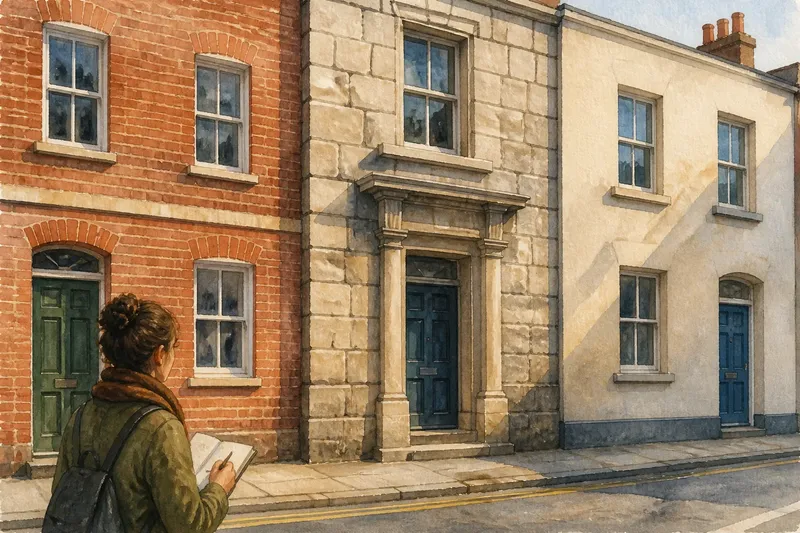
Pay attention to small transitions: a broad pavement narrowing beside a row of shops, a service lane opening behind offices, or a residential entrance set back from a busy road. These details show how people encounter the area at walking speed. They can also reveal where a building’s influence stops.
What if the streets around it seem to tell conflicting stories?
That often means the neighbourhood contains distinct uses or edges, rather than one neat identity. A tower may face a transport hub on one side and low-rise homes on another. Treat the contrast as information; do not force both sides into a single description.
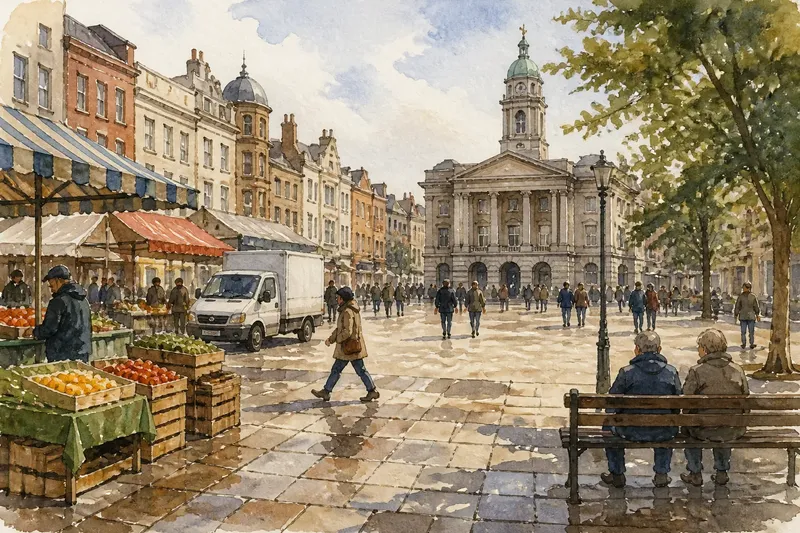
Compare the routes people actually take. Are there crossings that make one side easy to reach and another awkward? Do shopfronts continue along the street, or do blank walls interrupt the walk? Notice whether a nearby park, school, bus stop or row of small businesses draws people at different times. These observations help distinguish a boundary from a simple change in architectural style.
Say you arrive at an invented neighbourhood where a tall hotel overlooks a narrow street. You notice delivery vehicles using a side lane, residents entering through a quieter doorway and a bakery drawing foot traffic towards a bus stop. The expected result is not a grand verdict about the area; it is a more grounded account of how hospitality, housing and local errands occupy neighbouring routes.
How can you tell whether a feature matters beyond the view?
Ask what the feature does at street level. A landmark might provide a public passage, shelter at a corner, a useful meeting point or nothing more than a striking outline. Its role depends on access and use, not just appearance.
Check the edges around it. Entrances, windows, loading doors, seating and signs all suggest different relationships with the pavement. A transparent ground floor may invite a glance inside, while a long blank frontage can make the same stretch feel separate from the activity behind it. Neither condition explains the whole neighbourhood, but each helps describe how the building meets its surroundings.
Which clues help you build a fuller picture?
Does the tower attract people or simply orient them?
Watch whether people enter, pause nearby or use it chiefly as a direction-giving point. A landmark can shape how someone navigates even when its interior plays little part in everyday neighbourhood life.
What changes one block away?
Notice shifts in pavement width, ground-floor uses, traffic and building height. A quick change may mark a local edge or a transition between different kinds of activity.
Who has access to the space around it?
Look for open routes, seating and entrances, then notice which spaces appear restricted or designed for customers and staff. This helps separate a public-facing landmark from a building whose main life is private.
Which everyday destinations sit outside its shadow?
Look for places people need repeatedly, such as a corner shop, clinic, school or bus stop. These destinations can reveal the neighbourhood’s practical connections more clearly than a skyline view.
How do you avoid replacing one shortcut with another?
Do not decide that the small shop, the old building or the busiest corner is the “real” neighbourhood instead. That merely swaps one emblem for another. Keep descriptions tied to what you can observe: where people walk, what kinds of entrances appear, and how activities differ from one stretch to the next.
A simple note on your phone can help. Record a few features from separate streets, using plain descriptions rather than labels such as “up-and-coming” or “traditional”. If the same pattern appears in several places, you can say so; if it is limited to one block, keep that boundary in your account.
The landmark shortcut is useful for finding your bearings, but it becomes misleading when it ends the enquiry. On your next neighbourhood walk, use the tower to orient yourself, then look past it to the routes, thresholds and everyday destinations that make the surrounding area more than a view.